In addition to being rich in Mayan cultural heritage, the
state of Chiapas is also rich in natural resources and wonders of nature. Up to
this point, we had seen crocodiles, howler monkeys, flocks of parrots and
toucans all in their natural habitats.
For this portion of our adventures in Chiapas, we headed to El Parque
Nacional de Agua Azul (the cascades of Blue Waters National Park) and the Misol
Ha waterfalls.
 Agua Azul National
Park
Agua Azul National
Park The cascades known as Las Cascadas de Agua Azul are in a
national park located about an hour outside of the town of Palenque, and are
one of the most picturesque set of cascades I have ever had the opportunity to
see. Dry season (basically
November-April) is the best time to see the cascades, as it is when they are at
their most beautiful in terms of color: a surrealistic turquoise blue. Rain churns up more sediment in the water, so
they can look more brownish. In our
case, the conditions were not perfect as it had rained a lot in the previous 48
hours, but the cascades were still incredibly beautiful.
The cascades known as Las Cascadas de Agua Azul are in a
national park located about an hour outside of the town of Palenque, and are
one of the most picturesque set of cascades I have ever had the opportunity to
see. Dry season (basically
November-April) is the best time to see the cascades, as it is when they are at
their most beautiful in terms of color: a surrealistic turquoise blue. Rain churns up more sediment in the water, so
they can look more brownish. In our
case, the conditions were not perfect as it had rained a lot in the previous 48
hours, but the cascades were still incredibly beautiful. 
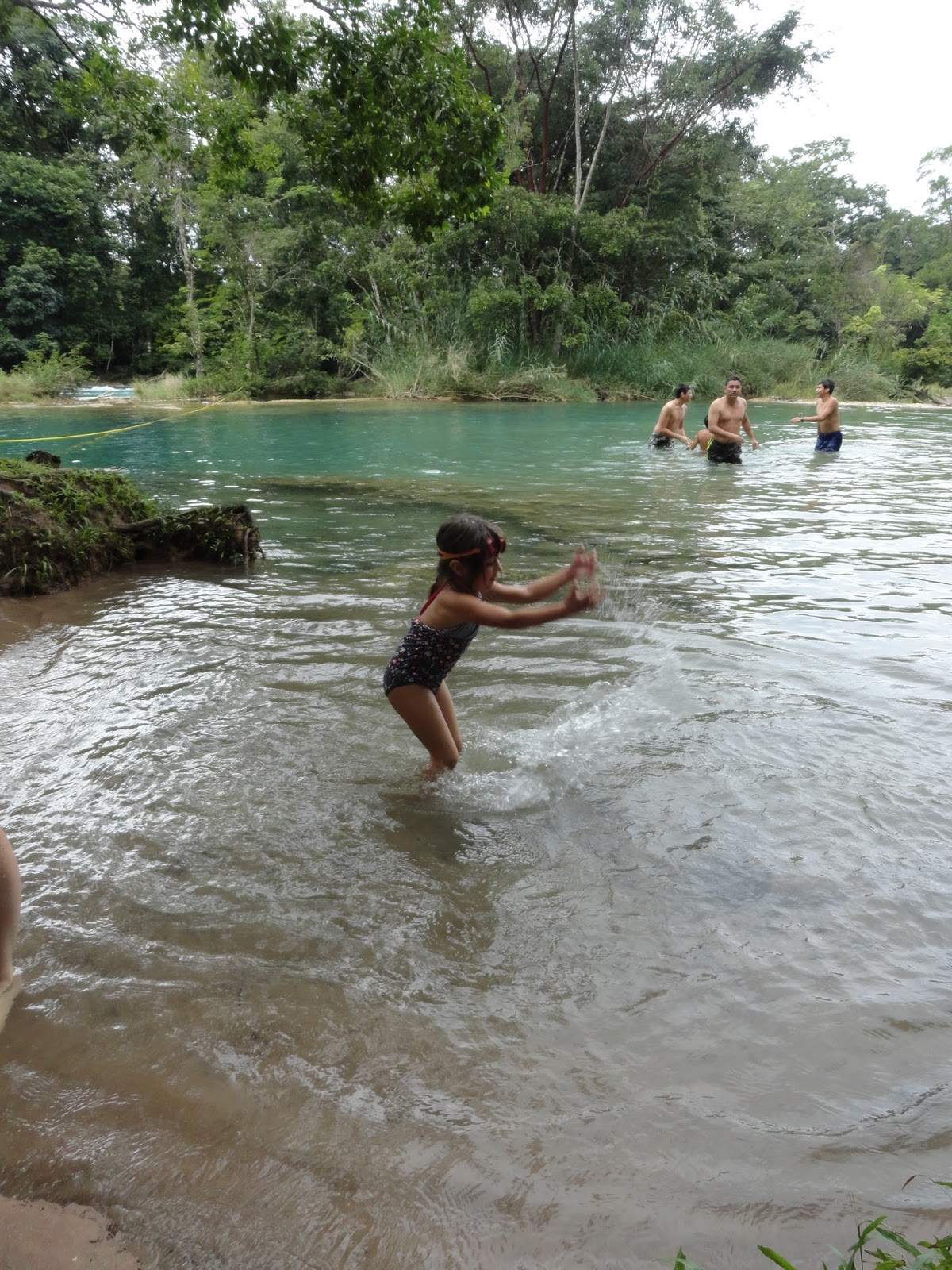
 The added bonus, is that there are a few areas where
swimming is allowed. One is near the
bottom of the cascades where the river continues in a more lazy fashion. The second is higher up, near the top of the
tourist section. Of course, you can hop
in and get wet lots of other places, but it is 100% at your own risk. We opted for a quick swim at the upper portion
of the cascades. It was quite refreshing
(and a little chilly for some), and long overdue for this trip!
The added bonus, is that there are a few areas where
swimming is allowed. One is near the
bottom of the cascades where the river continues in a more lazy fashion. The second is higher up, near the top of the
tourist section. Of course, you can hop
in and get wet lots of other places, but it is 100% at your own risk. We opted for a quick swim at the upper portion
of the cascades. It was quite refreshing
(and a little chilly for some), and long overdue for this trip!
After our swim, we headed to the obligatory fresh coconut
stand for nourishment. This is a
tradition for our trips to Mexico, and there are those in our party (Josh!) who
cannot complete a trip without at least one fresh coconut someplace along the
way. Mission Accomplished!
Cascada de Misol Ha
 Continuing with our aquatic theme, after our stop at Agua
Azul we took a quick detour to see the waterfalls of Misol Ha. They are nearly 100 feet tall and their jungle
atmosphere make them incredibly beautiful.
If time permits, you can swim at the base of the waterfall. We didn’t do so, as we wanted to beat the
approaching darkness and opted to walk the path behind the waterfalls instead. The roar of the falling water is impressive.
Continuing with our aquatic theme, after our stop at Agua
Azul we took a quick detour to see the waterfalls of Misol Ha. They are nearly 100 feet tall and their jungle
atmosphere make them incredibly beautiful.
If time permits, you can swim at the base of the waterfall. We didn’t do so, as we wanted to beat the
approaching darkness and opted to walk the path behind the waterfalls instead. The roar of the falling water is impressive.
 Even more interesting is a spot behind the waterfall where
another water source exits the mount in a smaller set of cascades. For an extra 10 pesos per person, you are
given a flashlight and can walk through a series of unlit caves, sometimes over
rocks, sometimes through shallow water, to a larger cavern several rooms back
where another subterranean waterfall pours into a large pool. In that cave, if your flashlight is strong
enough, you can see bats resting on the ceiling of the cave, as well as a glittery
show of wet smaller stalactite formations.
As you pick your way back over boulders and through the exiting stream,
you give thanks that this is “dry season” as I suspect that it may be difficult
or impossible to experience the internal waterfall during the times of abundant
rainfall.
Even more interesting is a spot behind the waterfall where
another water source exits the mount in a smaller set of cascades. For an extra 10 pesos per person, you are
given a flashlight and can walk through a series of unlit caves, sometimes over
rocks, sometimes through shallow water, to a larger cavern several rooms back
where another subterranean waterfall pours into a large pool. In that cave, if your flashlight is strong
enough, you can see bats resting on the ceiling of the cave, as well as a glittery
show of wet smaller stalactite formations.
As you pick your way back over boulders and through the exiting stream,
you give thanks that this is “dry season” as I suspect that it may be difficult
or impossible to experience the internal waterfall during the times of abundant
rainfall.


